
Spotting and Treating Common Houseplant Pests
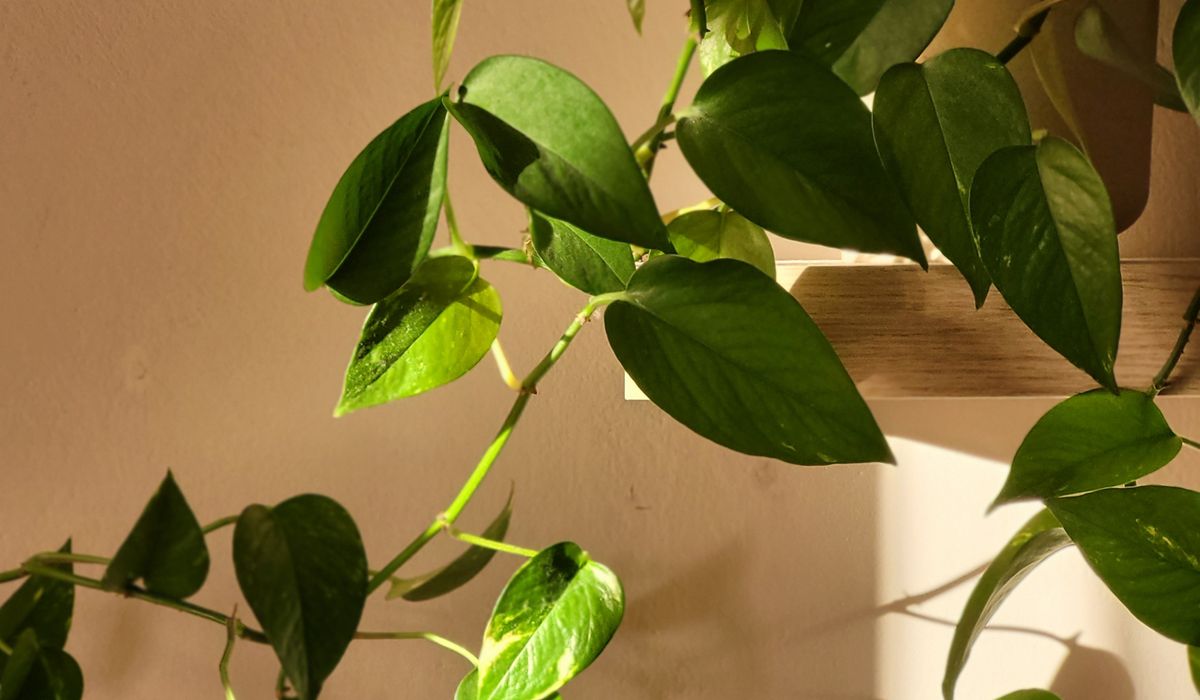
Why pothos is the easiest houseplant to propagate
Few houseplants reward a casual snip with quite such enthusiasm as pothos. Epipremnum aureum — devil's ivy to most of us — grows roots from the nodes along its stem: the small bumps where leaves and aerial roots emerge. Give a node warmth, moisture and bright indirect light and it will begin pushing out roots within a fortnight. That reliability makes it the perfect plant to learn on, and the golden, marble queen, jade and neon varieties all propagate in exactly the same way, so the skills transfer immediately.
Taking a cutting that will actually root
Everything depends on the node. A cutting without one is simply a leaf in a jar, and it will sit there looking hopeful until it yellows and gives up. Choose a healthy vine from the outside of the plant — not one already thin and pale from being shaded — and use sharp, clean scissors.
Cut a piece 10–15cm long with two or three nodes. More nodes mean a better chance of success and a bushier plant later.
- Cut about a centimetre below a node, on a slight angle, so the node travels with the cutting.
- Strip the lower leaves so no foliage sits in water or soil; a submerged leaf rots quickly and can sour the whole cutting.
- Leave one or two healthy leaves at the top to keep the cutting photosynthesising.
- Small brown nubs along the stem are aerial roots. Handle them gently — they are often the first to elongate.
Rooting in water: simple, visible and forgiving
Water rooting is the method most people try first, and with good reason: you can see exactly what is happening. Use a clean glass jar, fill it with room-temperature water, and stand the cutting so the nodes are submerged and the leaves sit well above the surface. Filtered water, or tap water left to stand overnight, is ideal.
The most important habit is changing the water every five to seven days. Stagnant water loses oxygen, clouds, and encourages bacteria that turn stems to mush. In warm weather, change it every three or four days, rinsing the jar and roots gently each time.
Keep the jar warm and bright but out of direct sun — an east- or north-facing windowsill is ideal. Roots usually appear in two to four weeks; let them reach 5–10cm before potting. If the cut end looks brown and soft, snip it back to clean tissue and start again.
Rooting directly in soil
Soil rooting is less visible but produces a cutting that never has to adapt from water to compost. Use a small pot — around 9cm is plenty — filled with a free-draining mix of roughly half multipurpose compost and half perlite or horticultural grit.
Push the cutting in so at least one node sits below the surface, with the leaves above. Firm the compost and water so it is evenly moist but never soggy. To keep humidity high, cover the pot with a clear plastic bag or place it in a propagator, opening it briefly each day for ventilation.
Roots form in three to six weeks. Resist the urge to tug; fresh new growth is the surest sign that roots have taken hold. Water when the top centimetre of compost feels dry, and keep the pot at a steady 18–24°C.
Potting on and the first few weeks
If your cutting rooted in water, move it to compost once the roots are long enough to handle. Expect a little sulking: for the first fortnight keep the compost consistently moist and out of strong sun while the plant grows soil-adapted roots. Soil-rooted cuttings skip this stage entirely.
Wait four to six weeks before feeding, then use a balanced houseplant feed at half strength once a month through spring and summer. Pinch out the growing tip once the vine has a few leaves to encourage branching and a fuller plant.
Troubleshooting the common snags
- Mushy black stems: almost always rot from stagnant water or a submerged leaf. Cut back to firm tissue and start again.
- No roots after a month: usually too cold, too dark, or the node was left above the waterline.
- Yellowing lower leaf: normal as the cutting redirects energy into roots. Remove it and carry on.
- Algae in the jar: a sign of too much light and old water. Rinse thoroughly, change more often, and move the jar out of direct sun.
Above all, be patient. Pothos is forgiving, and a cutting that looks stubborn for three weeks will often surprise you with a tangle of roots by the fourth. Take several at once and you will soon have enough greenery to fill every shelf in the house.
LEAVE A COMMENT